
Waste management companies must balance collection productivity, operating expenses, vehicle availability, and employee safety. Every collection route involves several moving parts, including vehicle capacity, container handling, traffic, disposal locations, and the type of refuse being collected. When equipment is not suited to the work, delays and unnecessary costs can affect the entire operation.
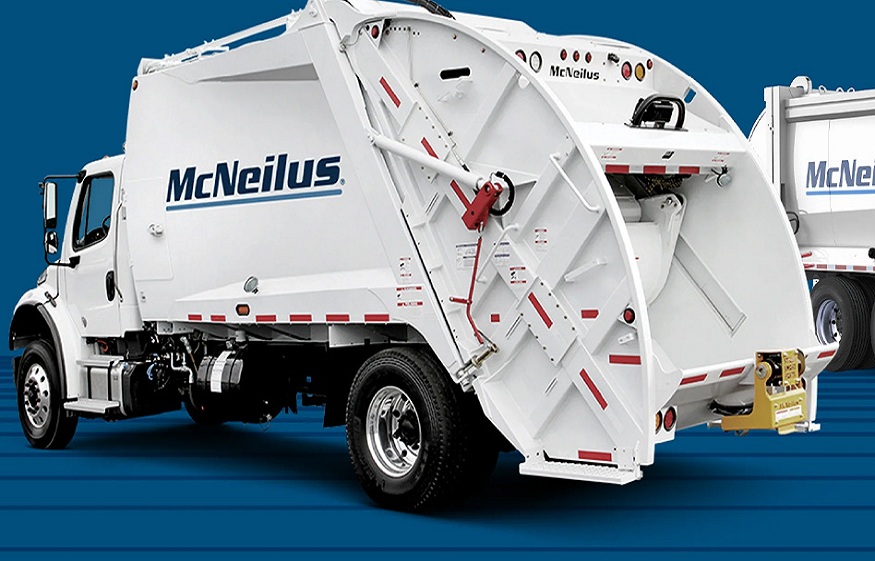
A well-configured rear loader can support an organized collection process by providing a practical loading arrangement and a packing system that moves refuse into the truck body. McNeilus offers several rear loader configurations for residential, commercial, and specialized applications. Understanding their features can help fleet managers evaluate how the equipment may contribute to operational efficiency.
Matching Equipment to the Collection Route
Efficiency begins with selecting a vehicle that fits the route. A residential collection route may involve frequent stops and household containers, while a commercial route may include larger containers and heavier materials.
The truck’s body capacity, hopper arrangement, chassis, and optional equipment should match these conditions. A vehicle that is too large may be difficult to maneuver in restricted areas, while one with insufficient capacity may require more frequent unloading.
Fleet managers should review route length, average waste volume, container types, road access, and disposal facility locations before selecting a configuration.
Hydraulic Packing and Material Handling
A rear loader receives refuse through the hopper at the back of the vehicle. Its hydraulic packing system compresses collected material and moves it into the body.
This arrangement allows crews to continue loading during the route without manually arranging refuse inside the body. The packing process is a central part of the truck’s operation because it affects how the available space is used.
The correct equipment should be selected according to the material being collected and the operating demands of the route. Operators must also follow the manufacturer’s procedures and safety instructions when using the packing mechanism.
Selecting the Right Body Capacity
Body capacity can influence how often a truck needs to travel to a disposal or transfer facility. A suitable body size may help a business organize collection schedules and reduce unnecessary unloading trips.
Atlantic Heavy Duty lists standard McNeilus rear loader capacities of 17, 20, 25, 28, and 32 cubic yards. Heavy Duty configurations are listed in 20-, 25-, 28-, and 32-cubic-yard sizes, while other models have their own capacity options.
However, volume is not the same as legal payload. Dense materials can cause a truck to reach its weight limit before the body is full.
Businesses should use collection data and consider axle ratings, chassis capacity, waste density, and applicable regulations when choosing a body size.
Choosing Suitable Compaction Capability
Different waste streams place different demands on the packing system. A standard configuration may be appropriate for many residential and light commercial routes. Heavy Duty and Extra Compaction models are intended for applications requiring greater compaction capability.
Atlantic Heavy Duty describes the Extra Compaction configuration as suitable for commercial use and demolition stops. The XXC package adds features such as a thicker body floor and reinforced load edge for more demanding routes.
Choosing suitable compaction equipment can help businesses match the truck to the material being collected. It does not, however, increase the legal payload limit of the vehicle.
Supporting Dual-Stream Collection
Some waste management programs collect recyclable materials separately from general refuse. A split-body rear loader can support this approach through separate compartments.
Atlantic Heavy Duty lists split-body McNeilus configurations in 25- and 32-cubic-yard capacities. This arrangement may allow a business to collect two waste streams on one route, depending on the collection program and compartment requirements.
Potential operational benefits include fewer separate collection trips for suitable routes and a more organized approach to material separation.
Businesses should examine the volume of each waste stream, unloading arrangements, and collection schedules before choosing a split-body vehicle.
Matching the Chassis to the Work
The chassis affects payload, handling, vehicle dimensions, and compatibility with the refuse body.
Atlantic Heavy Duty lists several chassis manufacturers for McNeilus rear loader configurations, including Freightliner, Peterbilt, Kenworth, Mack, Autocar, Battle Motors, and International.
The right choice depends on the body model, available configuration, route conditions, and local requirements. Fleet managers should check gross vehicle weight rating, axle ratings, wheelbase, engine, transmission, and cab layout.
Selecting a suitable chassis helps the complete vehicle perform within its intended operating limits.
Reducing Maintenance-Related Downtime
A truck that is unavailable for repairs cannot complete its assigned collection route. Preventive maintenance is therefore an important part of operational efficiency.
McNeilus highlights features intended to simplify maintenance, including fewer lubrication points and self-lubricating slide shoes on applicable configurations. These features may reduce certain routine service tasks, but the vehicle still needs regular inspections and servicing.
Maintenance teams should monitor hydraulic hoses, cylinders, filters, pumps, electrical controls, body wear areas, tires, brakes, and safety systems. Service records can help identify recurring issues and support better repair planning.
Supporting Safer and More Consistent Operations
Efficiency should never come at the expense of safety. Rear loader operations involve moving equipment, vehicle traffic, collection crews, and pedestrians.
Operators need training on the specific truck configuration, including controls, warning systems, safe loading procedures, and emergency processes.
Daily inspections should cover safety devices, lighting, controls, mirrors, cameras if fitted, and other required equipment. Any malfunction should be addressed before the truck returns to normal service.
Clear procedures and trained crews can help reduce avoidable delays and support consistent collection work.
Working With an Experienced Equipment Supplier
Selecting a rear loader requires an understanding of both the equipment and the collection operation. Atlantic Heavy Duty provides information about McNeilus rear loader configurations and encourages businesses to discuss their needs with a regional account manager.
Companies researching McNeilus rear loaders can compare standard, Heavy Duty, Extra Compaction, tag axle, and split-body options.
Conclusion
McNeilus rear loaders can support waste management efficiency through different body capacities, application-specific configurations, hydraulic packing systems, and maintenance-oriented features.
The most effective setup depends on the route, refuse type, payload requirements, container arrangements, and service support. Businesses that review these factors before purchasing can select equipment that fits their collection process and supports dependable daily operations.